
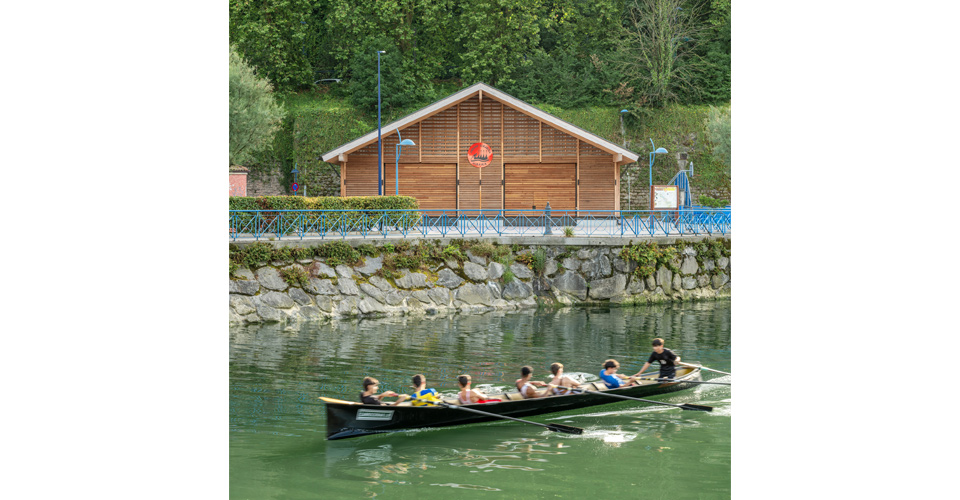
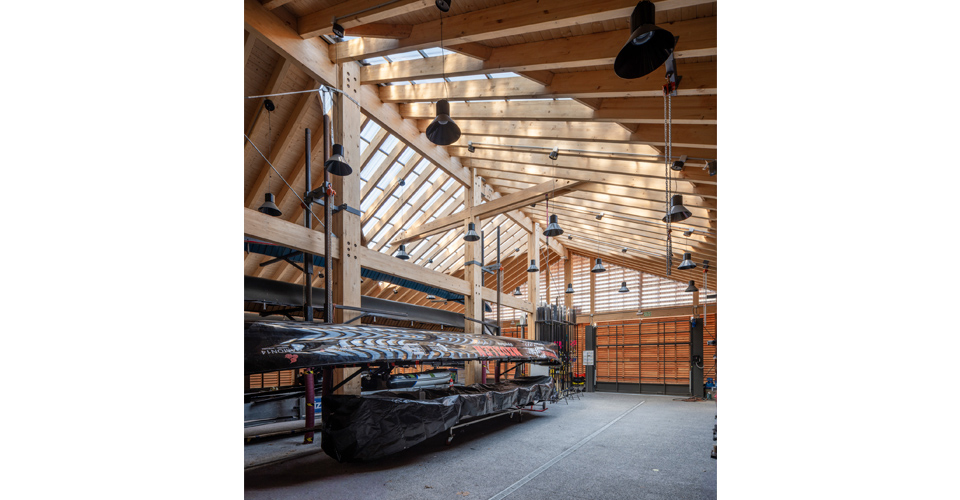
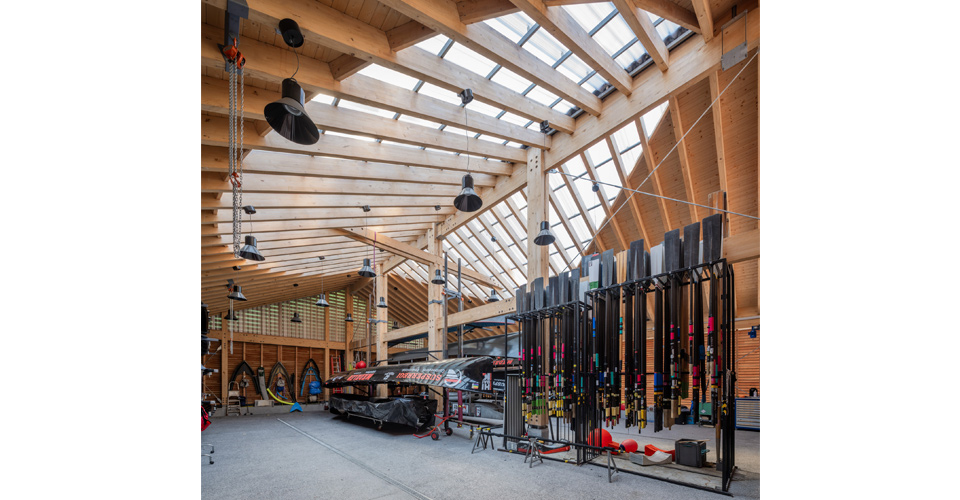
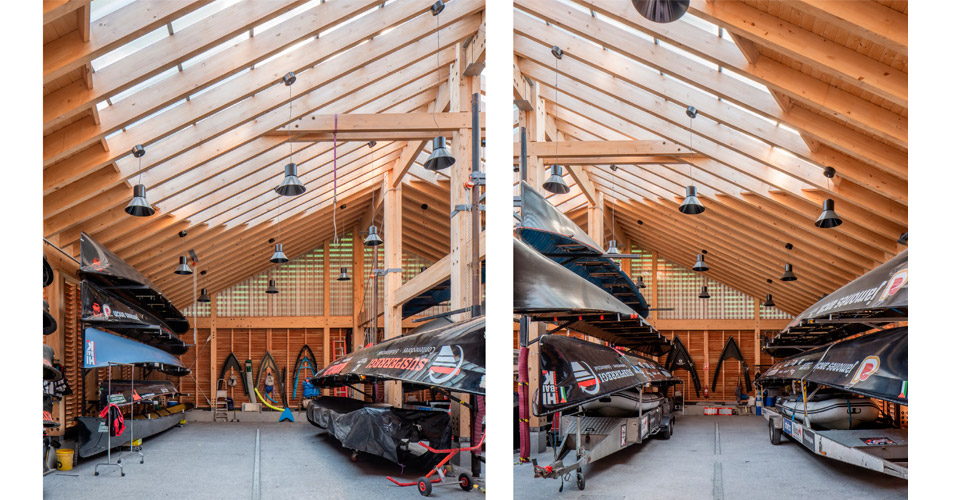
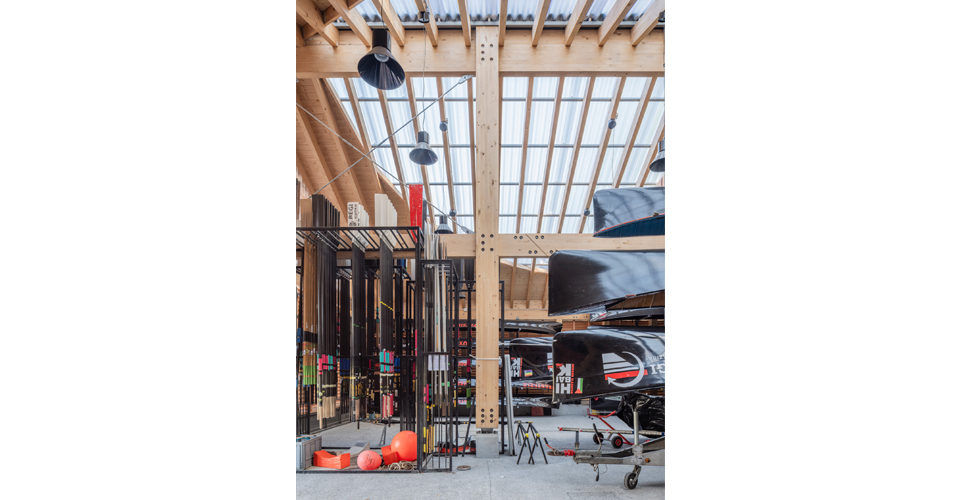
El nuevo pabellón de remo se implanta en la ribera del río Oiartzun a su paso por el municipio de Errenteria (Gipuzkoa), en continuidad con el sistema de espacios deportivos y recorridos peatonales que acompañan el paseo de Iztieta. Su ubicación responde a la voluntad de reforzar la relación histórica entre la actividad del remo y el paisaje fluvial, proporcionando una infraestructura específica para el almacenamiento y manejo de embarcaciones sin alterar el carácter del entorno.
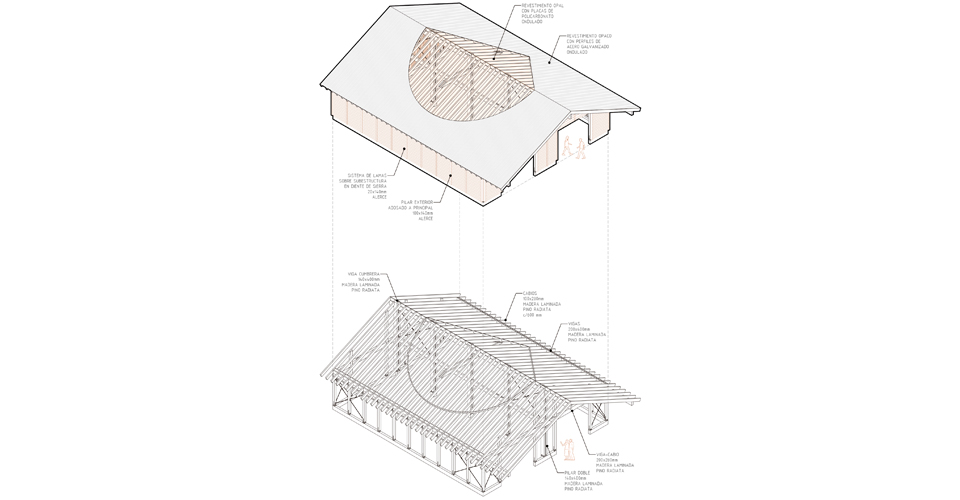
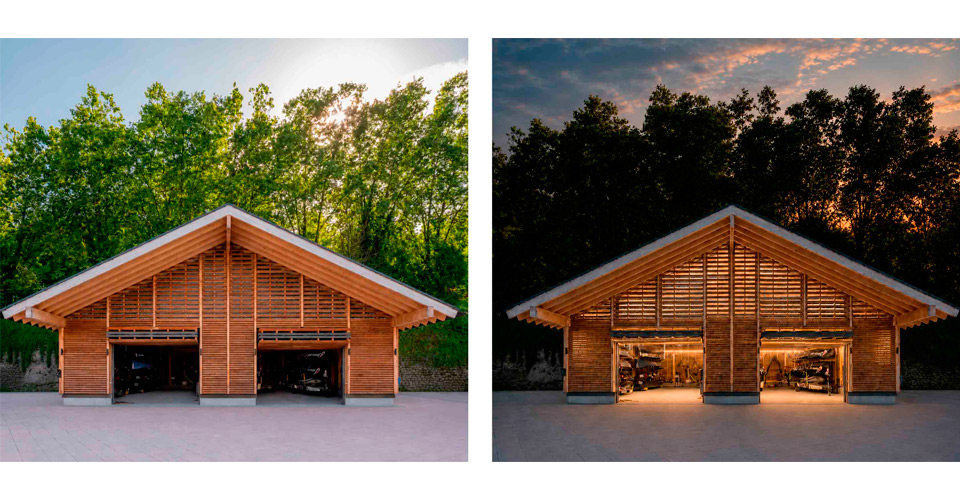
La propuesta se concibe como una arquitectura esencial, donde forma, estructura y uso convergen en una única respuesta constructiva. El edificio se resuelve mediante un volumen compacto de una sola planta, cubierto a dos aguas, cuya geometría favorece la claridad espacial del conjunto. Su presencia busca ser contenida, evitando competir con el paisaje y estableciendo un diálogo con el curso del río.
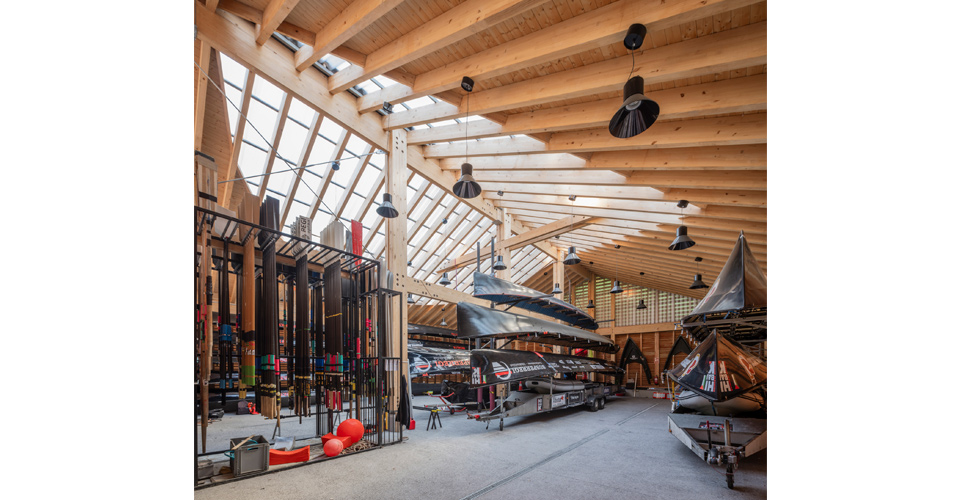
La iluminación natural constituye uno de los aspectos esenciales del proyecto. Amplias franjas geométricas translúcidas incorporadas en los faldones de cubierta permiten que la luz penetre profundamente en el interior, reduciendo la dependencia de iluminación artificial. La luz cenital transforma continuamente la percepción del espacio y pone en valor la materialidad de la madera.
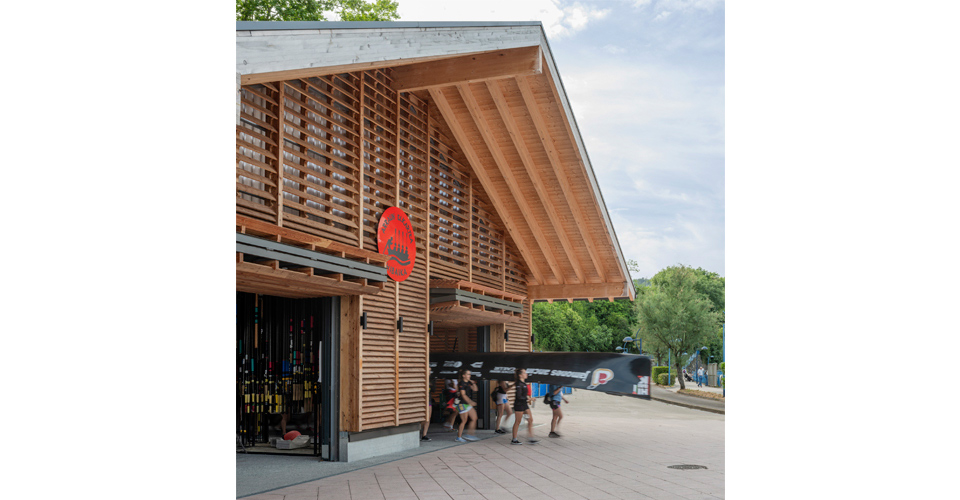
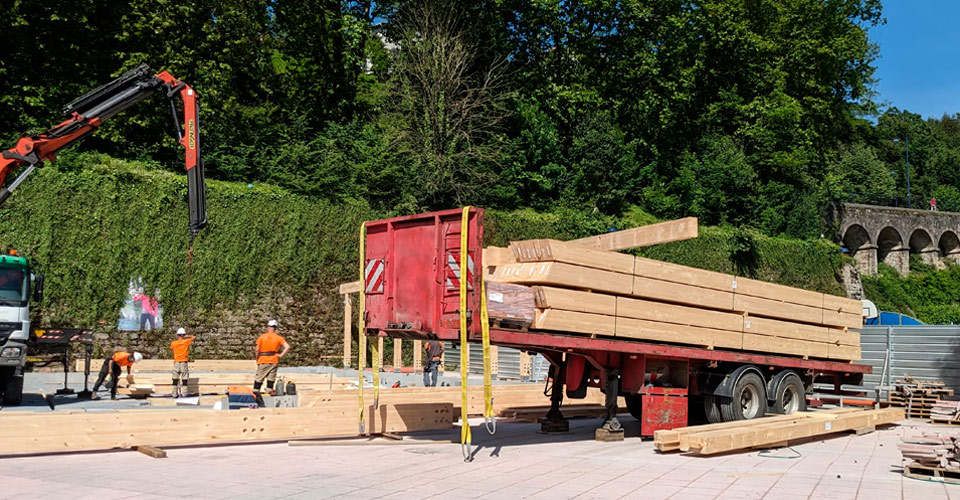
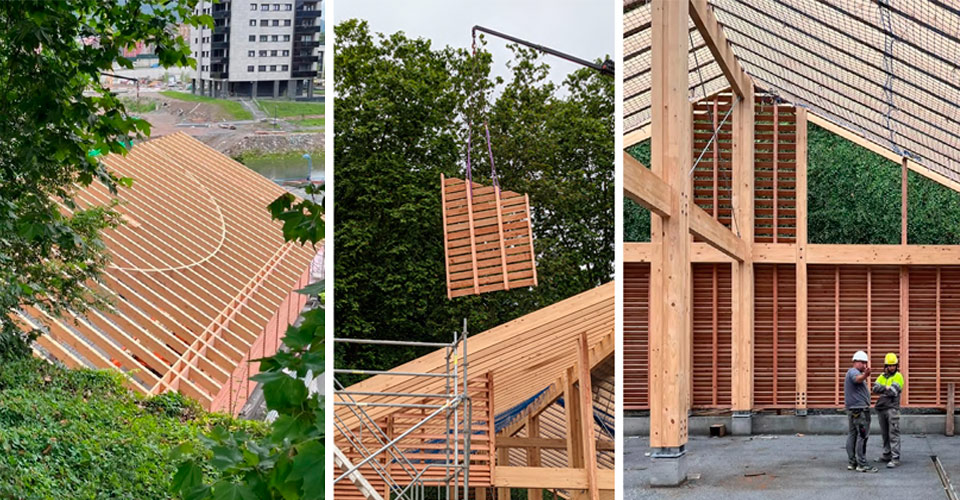
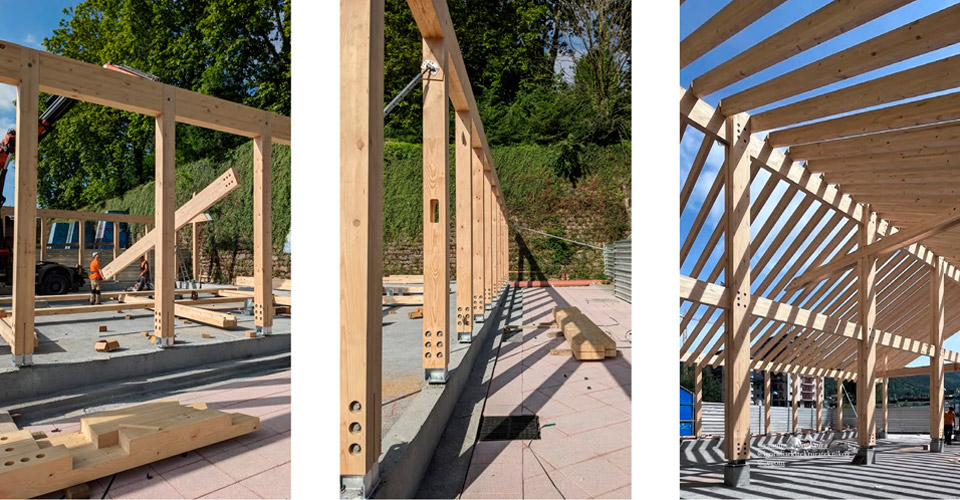
La arquitectura del pabellón expresa con claridad su condición de construcción ligera, desmontable y reversible. El resultado es una arquitectura capaz de responder a una necesidad funcional mientras establece una relación equilibrada entre lo urbano y la construcción contemporánea en madera.
—
Arraun-pabiloi berria Oiartzun ibaiaren ertzean kokatzen da, Errenteriako udalerritik igarotzen den tartean, Iztietako pasealekuan dauden kirol-espazioen eta oinezkoentzako ibilbideen sistemari jarraipena emanez. Kokapen horren bidez, arraun-jardueraren eta ibai-paisaiaren arteko lotura historikoa sendotu nahi da, ontziak biltegiratzeko eta erabiltzeko azpiegitura eskainiz.
Proposamena oinarrizko arkitektura gisa planteatzen da, non formak, egiturak eta erabilerak erantzun bakarrean bat egiten duten. Solairu bakarreko bolumen trinko baten bidez ebazten da, bi isuriko estalkiarekin; honen geometriak multzoaren argitasuna indartzen du. Eraikinaren presentzia neurrizkoa izatea bilatzen da, ingurunearekin lehiatu gabe eta ibaiaren ibilbidearekin elkarrizketa bat ezarriz.
Argiztapen naturala da proiektuaren funtsezko alderdietako bat. Estalkiaren isurialdeetan txertatutako argi-zulo geometriko zabalek, argia barnealdean sakon sartzea ahalbidetzen dute, argiztapen artifizialarekiko mendekotasuna murriztuz. Goitiko argiak etengabe eraldatzen du espazioaren pertzepzioa, zuraren materialtasuna nabarmenduz aldi berean.
Pabiloiaren arkitekturak argi adierazten du eraikuntzaren izaera arina, desmuntagarria eta itzulgarria. Behar funtzional bati erantzuteko gai den arkitektura izan behar du, eta aldi berean, hiri-ingurunearekin harreman orekatua ezarri.
—
The new rowing centre is situated on the banks of the River Oiartzun as it flows through the municipality of Errenteria (Gipuzkoa), forming part of the network of sports facilities and footpaths that run alongside the Iztieta riverside promenade. Its location reflects a desire to reinforce the historical link between rowing and the river landscape, providing a dedicated facility for the storage and handling of boats without altering the character of the surroundings.
The design is conceived as minimalist architecture, where form, structure and function converge in a single structural solution. The building takes the form of a compact, single-storey volume with a gabled roof, whose geometry enhances the spatial clarity of the whole. Its presence is intended to be understated, avoiding competition with the landscape and establishing a dialogue with the course of the river.
Natural lighting is one of the key aspects of the project. Wide, translucent geometric strips incorporated into the roof slopes allow light to penetrate deep into the interior, reducing the reliance on artificial lighting. The overhead light continuously transforms the perception of space and highlights the materiality of the timber.
The pavilion’s architecture clearly expresses its nature as a lightweight, demountable and reversible structure. The result is a building capable of meeting a functional need, while establishing a balanced relationship between the urban environment and contemporary timber construction.
Categories: 2025 / Cultural / Infrastructure / Landscape / Projects / Sport
pabellón de Remo
en la Ribera del río Oiartzun
Location: Errenteria, Gipuzkoa
Year: 2025
Collaborators: Igor Lili, arquitecto técnico; Biderbost Photo, fotografía 2-8_12;
Clients: Errenteriako Udala
Cost: 0,5 mill PEM
Surface: 332 m2
Status: Completed